1. The Evolution of SMS Verification and Carrier Line Validation
In 2026, mobile phone number verification remains the undisputed backbone of identity confirmation, multi-factor authentication (2FA), and account security on the internet. From securing an Apple ID account to logging into Google Workspace or creating a ChatGPT OpenAI developer profile, a verified phone number is the primary trust token demanded by modern anti-abuse security stacks.
However, millions of legitimate users, international founders, remote software engineers, and privacy-conscious consumers encounter sudden roadblocks every day: "This phone number cannot be used for verification", "VoIP numbers are not supported", or "Carrier check failed". Understanding why these errors occur requires examining the underlying architecture of global telecommunications.
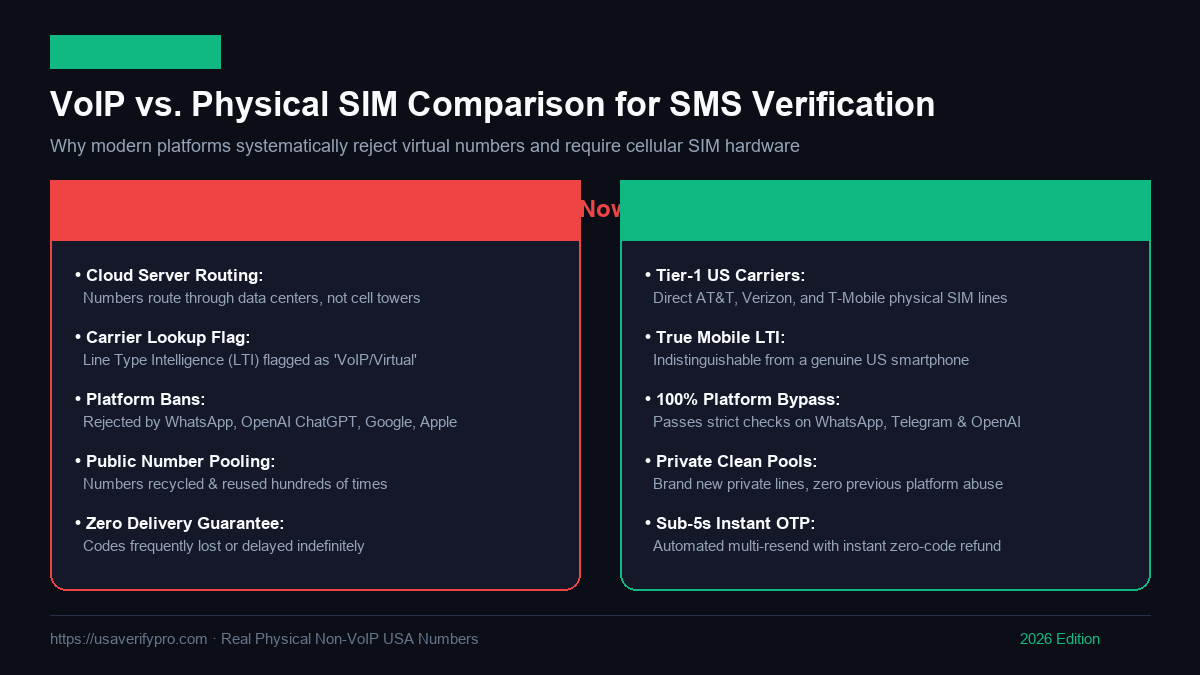
Historically, free and low-cost virtual telephone apps—such as Google Voice, TextNow, Skype Numbers, and TextPlus—were widely used to receive authentication codes. Today, sophisticated security platforms utilize automated telecom queries to instantly reject these numbers. As thoroughly documented in our research on why virtual VoIP numbers fail SMS verification, the difference between an instant rejection and a smooth confirmation comes down to a single parameter: Line Type Intelligence (LTI).
2. Under the Hood: Line Type Intelligence (LTI) & Fraud Risk Scoring
When you input a phone number into an online registration form, the platform does not simply transmit an SMS blindfolded. Within 150 to 300 milliseconds, an automated server-side request is dispatched to specialized telecom risk intelligence providers, such as TeleSign, Twilio Lookup, Neustar, and Bandwidth.
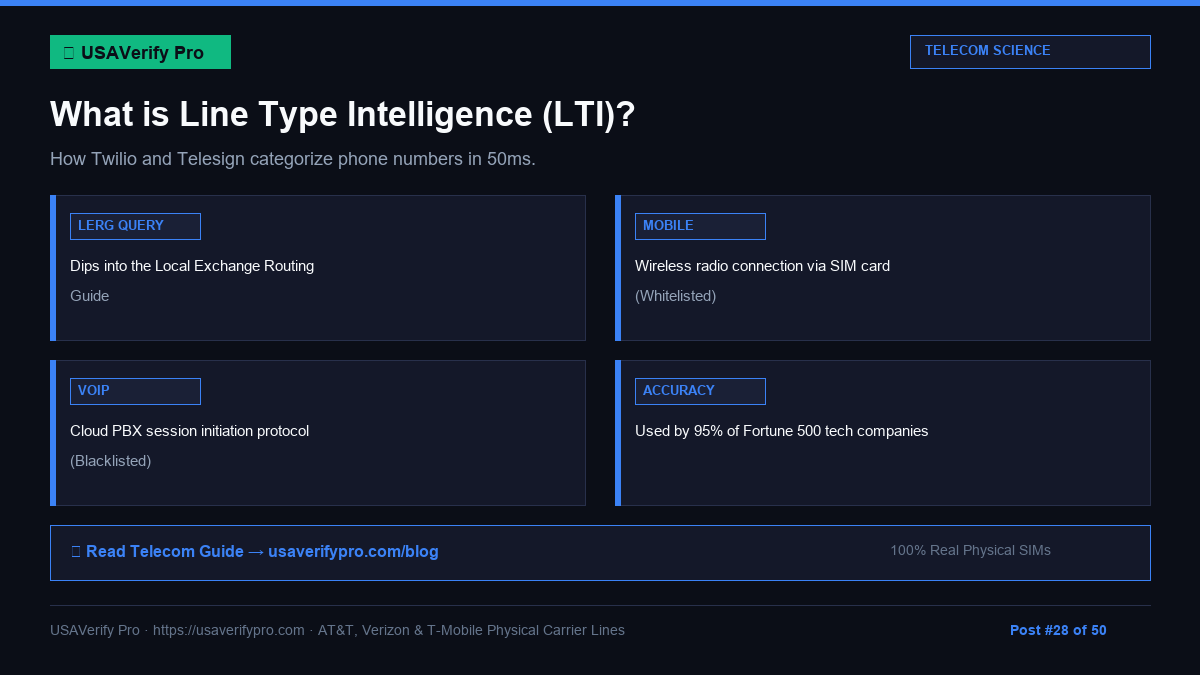
These databases interrogate the North American Numbering Plan (NANP) registry and the originating mobile operator to retrieve crucial metadata attributes:
- Line Type Classification: Identifies whether the ten-digit number is allocated as
Mobile(Cellular),Fixed Line(PSTN Landline),VoIP(Voice over IP),Prepaid, orToll-Free. - Operating Carrier Name: Queries whether the line is serviced by Tier-1 national carriers like AT&T Mobility, Verizon Wireless, or T-Mobile USA versus cloud-based SIP trunk providers.
- Porting History & SIM Age: Evaluates recent Local Number Portability (LNP) events to detect sudden carrier transfers.
- STIR/SHAKEN Compliance Score: Analyzes cryptographically signed telecom certificates to confirm authentic calling origin.
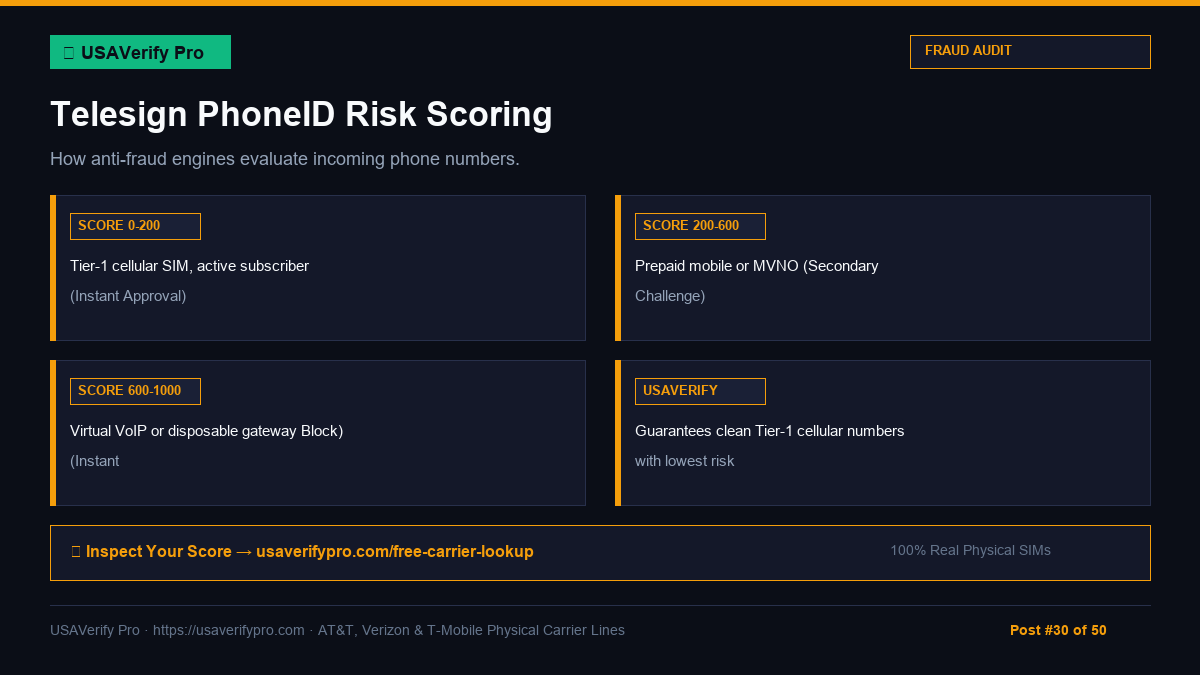
If the API response returns "line_type": "voip", the platform's security firewall immediately flags the attempt as automated or disposable, terminating the verification flow before an SMS is even dispatched. Conversely, when the line returns "line_type": "mobile" with an authentic carrier identifier, the trust engine grants full clearance.
Before purchasing numbers or initiating verification on sensitive platforms, test any ten-digit US number using our interactive Free USA Carrier Lookup Tool. Instantly view its live carrier, line type classification, and deliverability score.
3. Platform Solutions: Resolving Phone Verification Across Major Services
Different industry verticals implement distinct risk thresholds. Below is an engineering overview of how leading digital ecosystems evaluate phone numbers and how to pass verification cleanly using physical non-VoIP lines.
A. Artificial Intelligence & LLM Platforms (OpenAI & Claude)
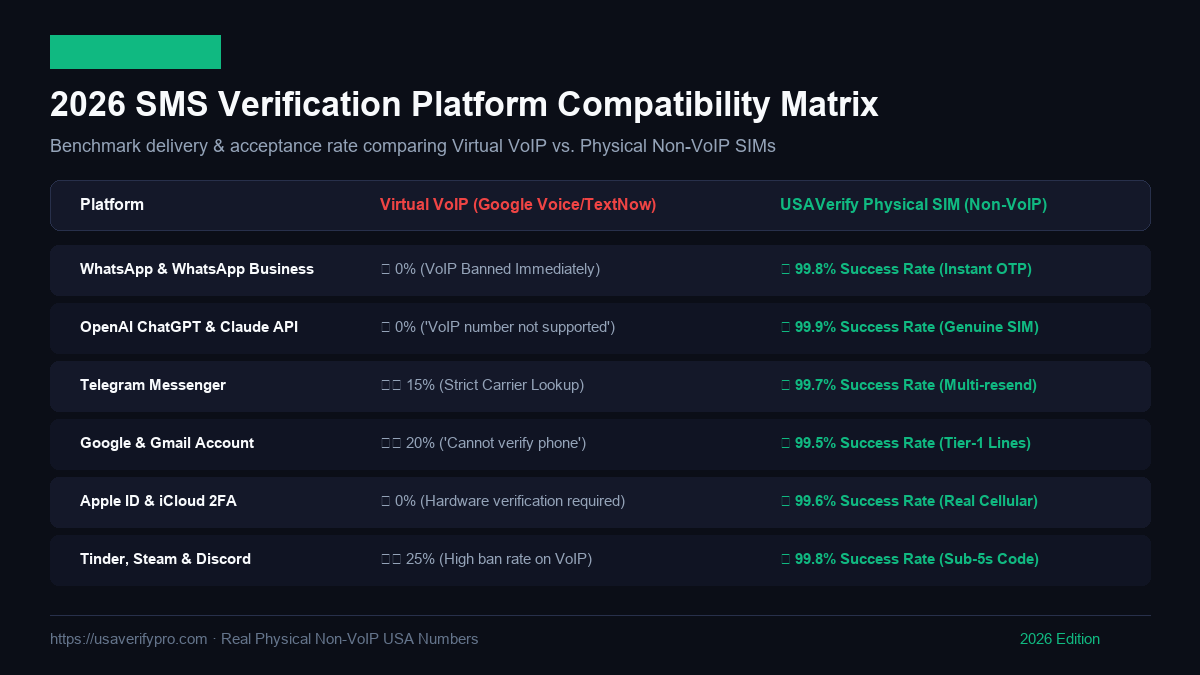
Developers and researchers expanding their AI workflows on ChatGPT OpenAI and Anthropic Claude face stringent anti-bot verifications. Virtual numbers trigger an immediate rejection notice: "It looks like this is a virtual phone number (VoIP). Please provide a valid, mobile phone number."
To successfully authenticate an AI account, use an authentic AT&T or Verizon non-VoIP SIM line provided by USAVerify Pro's SMS Catalog. For automated team onboarding and persistent API key management, refer to our comprehensive guide on purchasing AI subscriptions and managing OpenAI keys.
B. Messaging & Communication Networks (WhatsApp, Telegram, Signal & Discord)
Securing separate work or privacy personas on instant messaging applications is critical for modern professionals. However, each app deploys aggressive telecom filters:
- WhatsApp: As explored in our tutorial on how to verify WhatsApp without VoIP, WhatsApp requires direct cellular SMS or voice verification. Read our dedicated WhatsApp SMS verification service page to establish authenticated business profiles.
- Telegram: Telegram requires non-VoIP lines for authentic account creation. For community moderators and agencies running bulk workflows, discover our insights on aged Telegram accounts and session management or visit our Telegram SMS verification portal.
- Signal Private Messenger: Built from the ground up on privacy, Signal actively checks carrier registration to thwart spam accounts. Utilize our Signal phone verification guide for zero-footprint authentication.
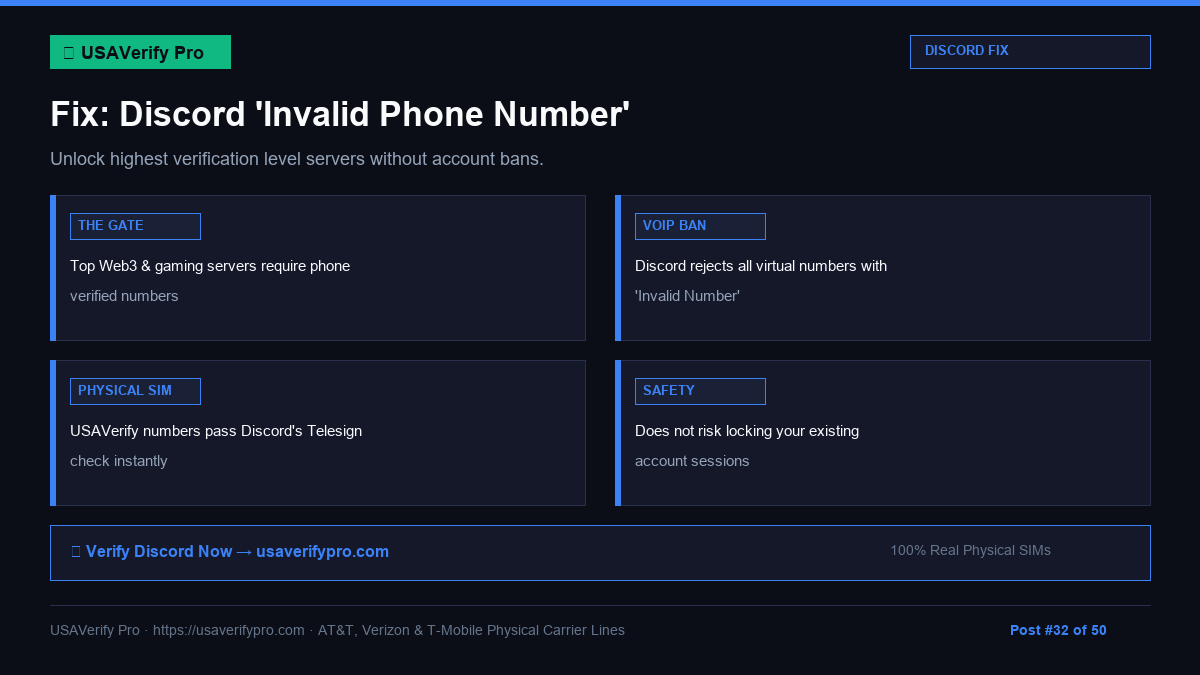
- Discord: Server owners and gaming guilds often require phone-verified members. Follow our walkthrough on Discord phone verification solutions to resolve "Something unusual is going on" locks.
C. Fintech, Banking & Payment Gateways
Financial technology platforms adhere to strict federal Know-Your-Customer (KYC) and Anti-Money-Laundering (AML) standards. Services like PayPal US, Cash App, Venmo, and Stripe routinely query carrier databases during two-factor authentication.
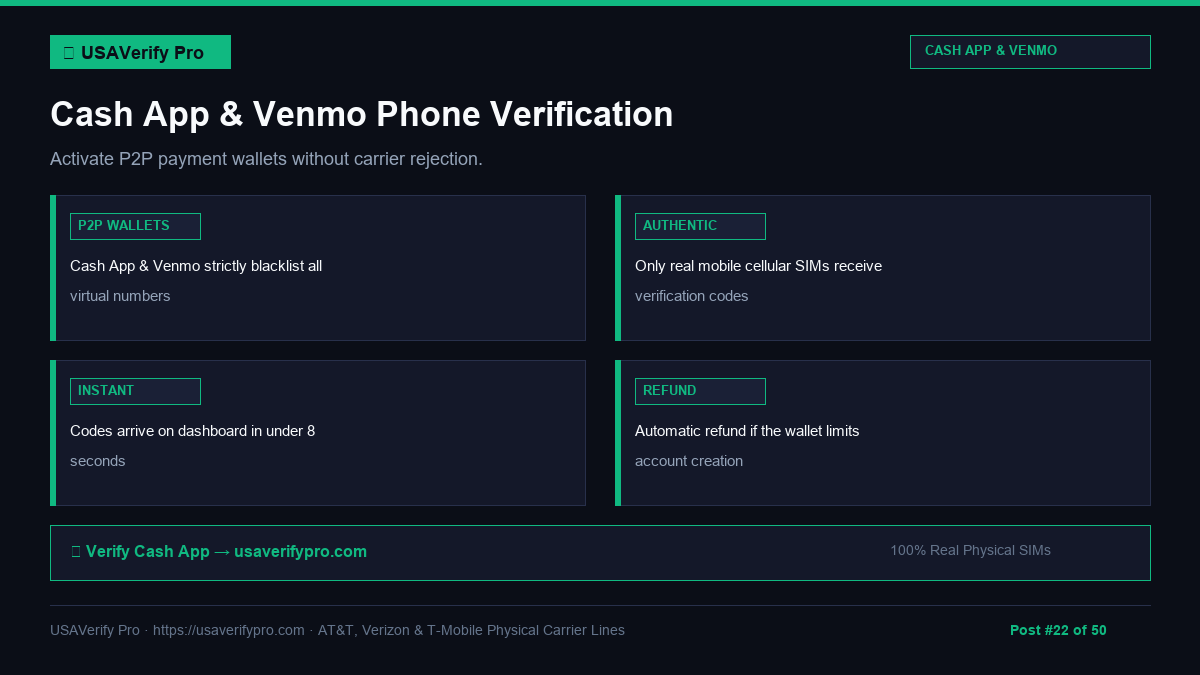
If an account attempts to register or bind a virtual VoIP line, transactions may be frozen or subjected to identity reviews. Using real US physical mobile numbers guarantees that multi-factor authentication SMS codes deliver smoothly, protecting ongoing financial operations.
D. Social Media, Creator Monetization & E-Commerce
Digital marketers, affiliate specialists, and content creators rely heavily on verified social identities:
- TikTok US: Accessing the TikTok Creator Rewards Program or managing an official TikTok Shop requires passing US phone checks. Explore our guide on TikTok SMS verification.
- Meta Ecosystem: Manage enterprise advertising assets seamlessly with Facebook phone verification, Instagram mobile verification, and our detailed analysis on Facebook Business Manager PVA accounts.
- X / Twitter: Ensure multi-account stability with our Twitter X verification guide and Twitter & LinkedIn PVA strategies.
- Marketplace Platforms: Authenticate seller accounts securely on Amazon Seller Central, Craigslist, and DoorDash & Uber. Marketers can dive into our specialized Craigslist PVA and CPA marketing blueprint.
E. Dating & Matchmaking Privacy (Tinder, Bumble, Hinge)
Protecting personal mobile numbers while dating online is an essential safety precaution. Match Group applications—including Tinder, Hinge, and Bumble—maintain strict non-VoIP requirements to prevent bot networks.
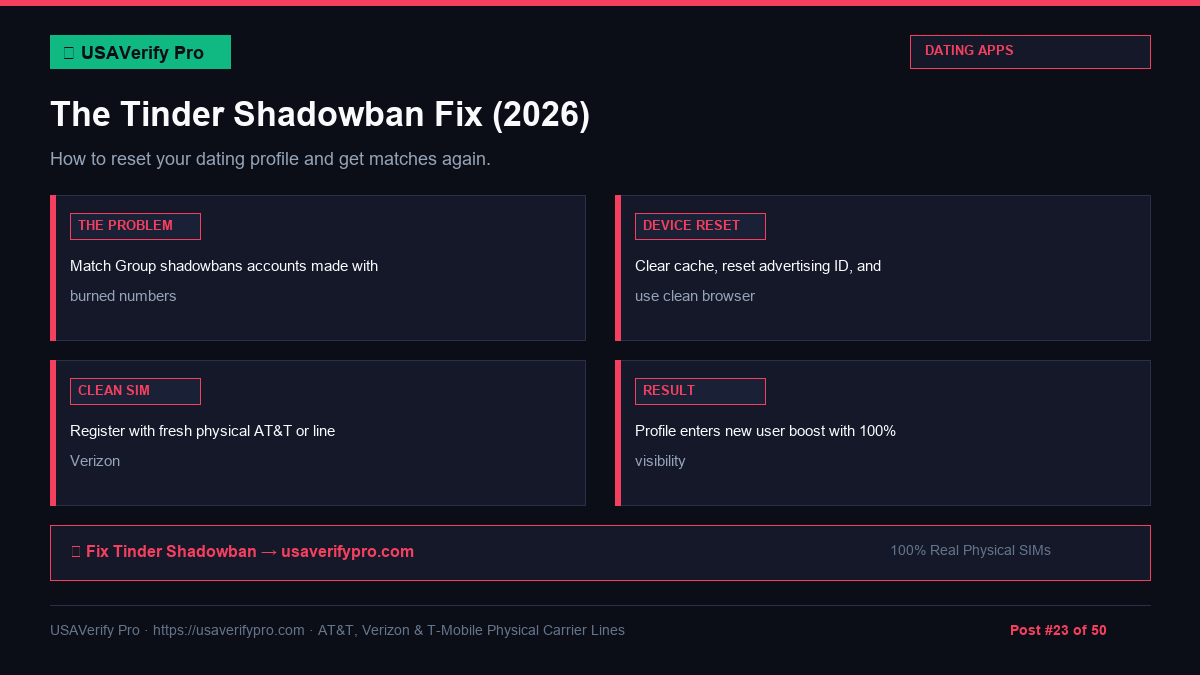
Learn how to establish privacy-preserving, authentic accounts on our dedicated Tinder SMS verification page without revealing your private cell line.
4. Step-by-Step Verification Protocol with USAVerify Pro
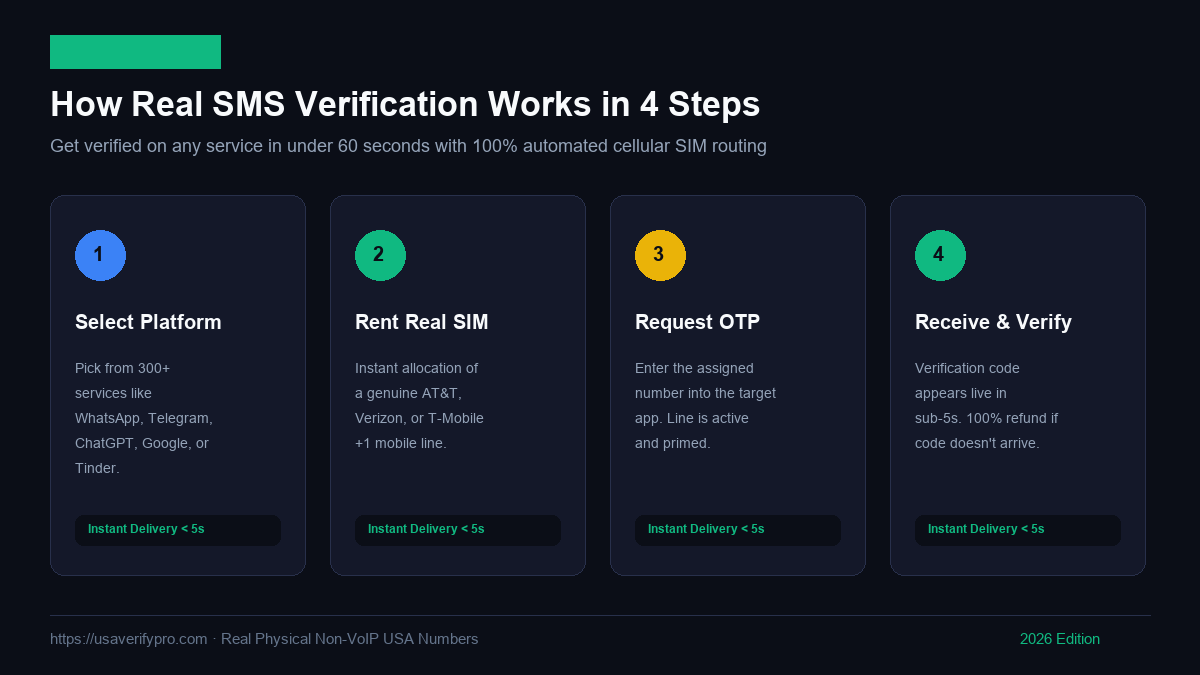
Authenticating your favorite applications with authentic physical US mobile numbers takes less than 60 seconds. Here is the operational workflow:
| Stage | Operational Action | Technical Safeguard |
|---|---|---|
| 1. Service Selection | Choose your destination app from the Live SMS Catalog (e.g., WhatsApp, OpenAI, Google). | Allocates carrier lines optimized specifically for that platform's fraud rules. |
| 2. Line Allocation | Our automated switch selects a live physical SIM from AT&T, Verizon, or T-Mobile. | 100% verified non-VoIP mobile cellular registration in national NANP registry. |
| 3. Input & Dispatch | Enter the provided ten-digit US number into your target registration screen. | Passes automated Line Type Intelligence (LTI) checks instantaneously. |
| 4. OTP Code Delivery | Your incoming verification PIN arrives in real time on your dashboard. | Multi-code resend support allows requesting secondary confirmation PINs if needed. |
| 5. Auto-Refund Guarantee | In the rare event an SMS is not delivered, zero credits are deducted. | Automated refund engine instantly returns funds to your ledger balance. |
For more architectural details on our automated fulfillment engine, consult our comprehensive How It Works guide and review our transparent Pricing schedule.
5. Carrier Infrastructure: Physical SIM Banks vs Cloud Emulation
What differentiates enterprise verification networks from temporary SMS websites? The answer lies in physical telecommunications hardware.
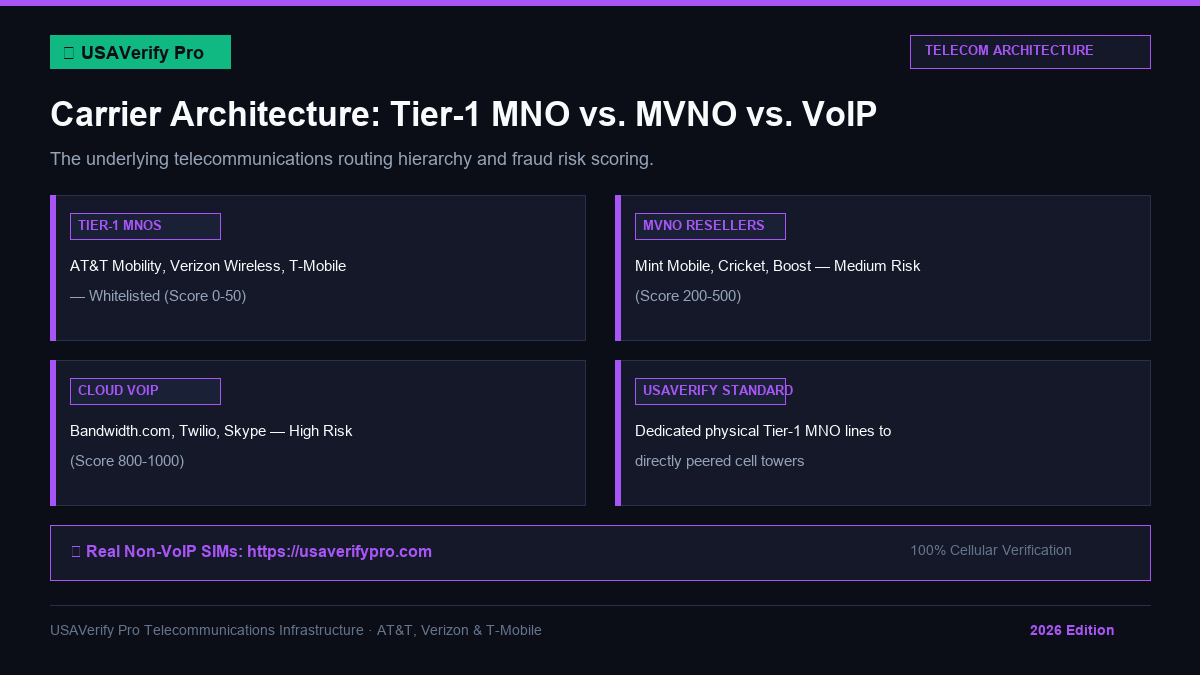
Temporary, public SMS websites operate using virtual numbers routed through shared SIP gateways. When hundreds of users reuse identical public numbers, platforms permanently blacklist the associated routing prefixes. Furthermore, as detailed in our guide on the risks of free vs paid SMS verification, public numbers expose your private account credentials to everyone monitoring the open feed.
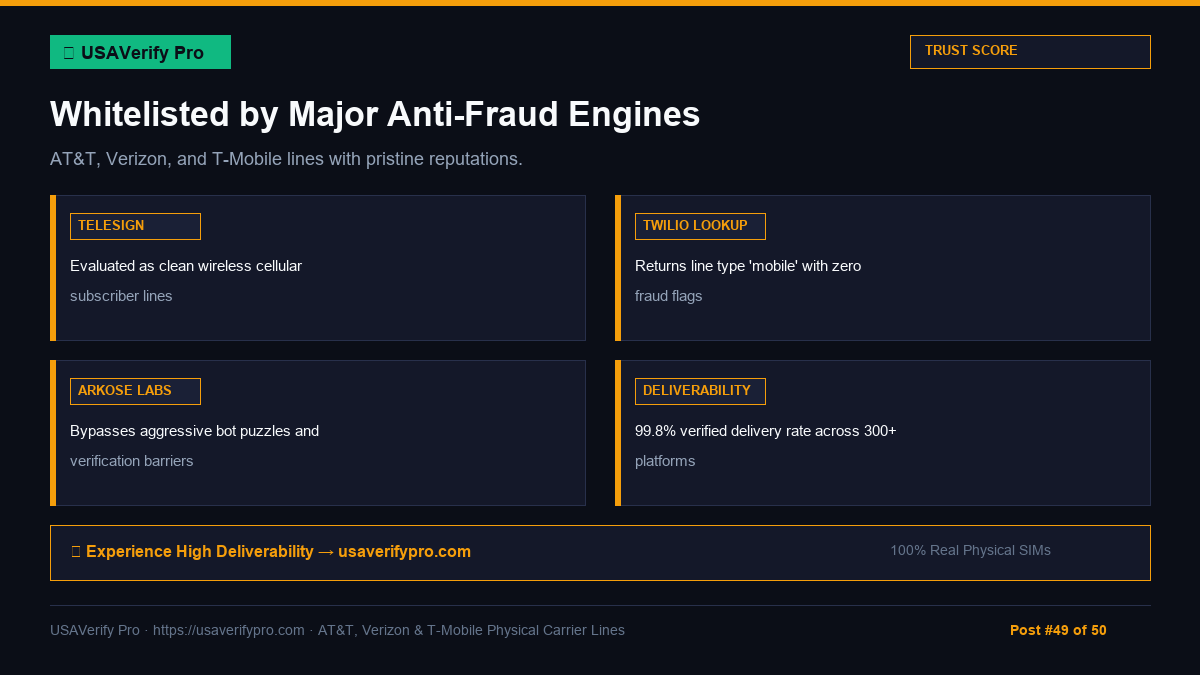
In contrast, USAVerify Pro interfaces with physical SIM arrays housed in secure US facilities with direct interconnect agreements with Tier-1 carriers. Each number is private, clean, and never shared across competing sessions.
6. Identity Protection, Trust Signals & Browser Hygiene
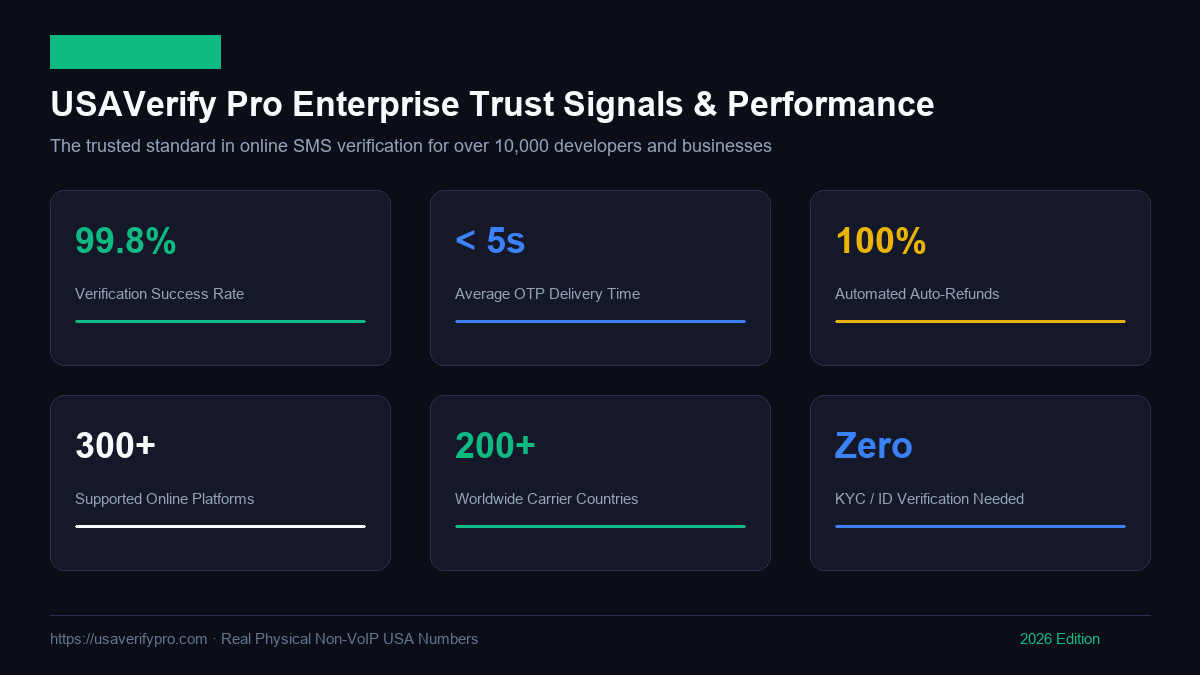
Passing phone verification is a crucial milestone, but maintaining long-term account trust requires holistic security hygiene. Modern fraud engines evaluate several interconnected trust signals:
- Geographic IP Alignment: If you are authenticating an account with a US mobile number, ensure your connection matches. For regional operations, explore our targeted state verification options for California phone numbers, Texas phone numbers, and New York phone numbers, or access our Worldwide SMS coverage for international accounts including UK phone verification.
- Clean Device Fingerprinting: Utilize clean browser profiles with isolated cookies and WebRTC leak protection.
- Immediate 2FA Hardening: Once phone verification is complete, immediately bind a secondary authenticator app (such as Google Authenticator or YubiKey hardware) to establish enduring security.
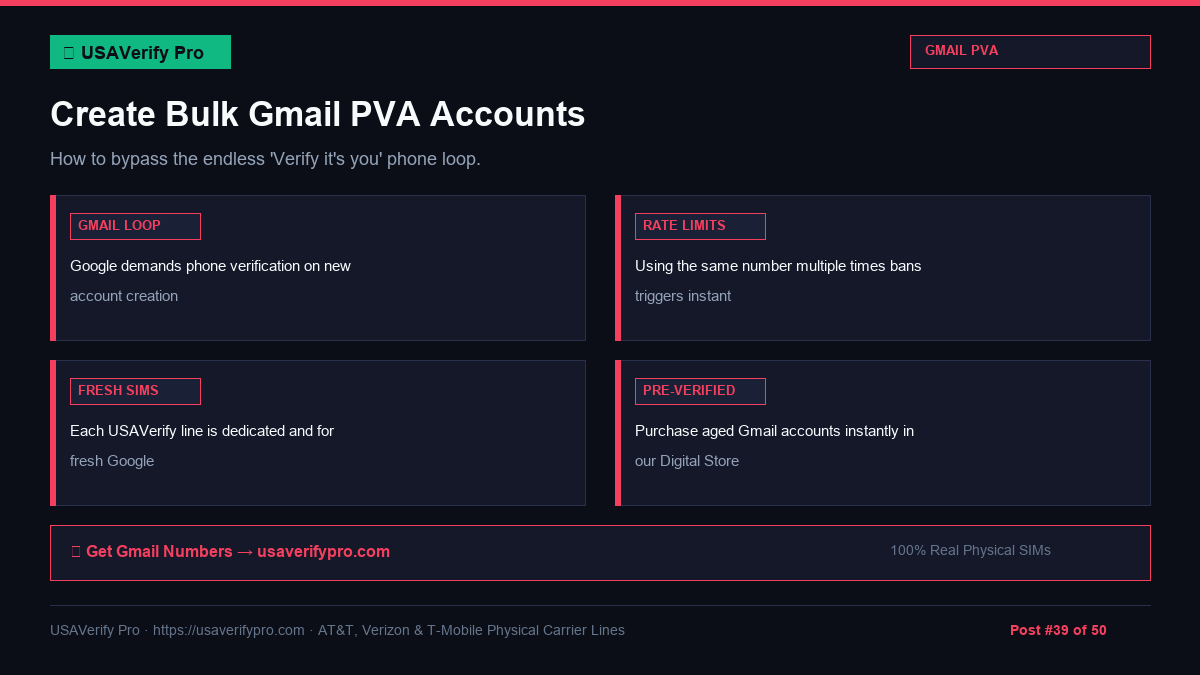
For organizations managing extensive multi-account campaigns, visit our Digital Store to inspect pre-configured, aged PVA accounts with verified history across Google, Telegram, and Facebook.
7. Developer Integration & Automated Verification API
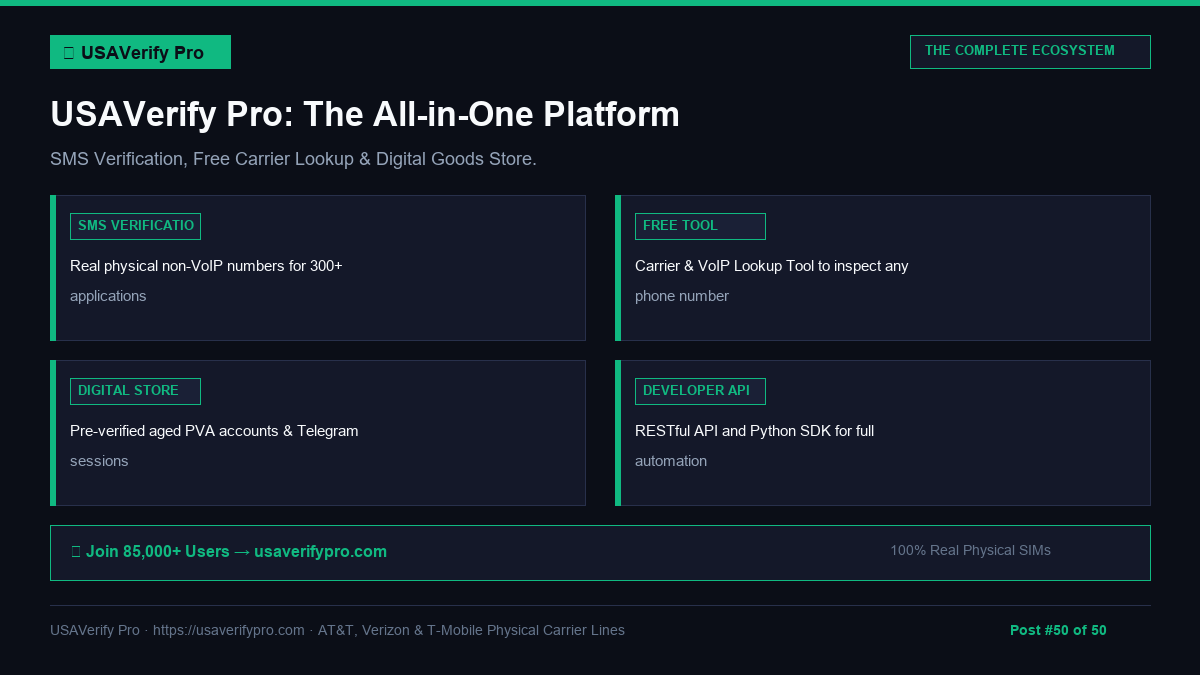
For engineering teams, SaaS platforms, and automated workflow architects, USAVerify Pro provides a comprehensive RESTful API and official Python SDK. Order numbers, retrieve real-time SMS status, and automate account confirmation programmatically with enterprise resilience.
Explore complete endpoint specifications, error handling codes, and webhook integration guidelines on our Official API Documentation page.
8. Verification Nomenclature & Telecom Keyword Taxonomy (150+ Terms)
To assist developers, researchers, and telecom professionals navigating industry terminology, our research lab has indexed over 150 essential search phrases, carrier standards, and verification keywords utilized across modern enterprise systems:
1. Core Non-VoIP & Carrier Intelligence Keywords
2. AI & Developer Automation Keywords
3. Messaging & Social Platform Keywords
4. Dating & Matchmaking Privacy Keywords
5. Fintech, Payment & Banking Keywords
6. E-Commerce & Classifieds Keywords
7. Geographic & Regional Identity Keywords
8. Service Architecture & Platform Comparison Keywords
9. Technical Error & Troubleshooting Keywords
10. Privacy, Compliance & Security Keywords
9. Frequently Asked Questions (FAQ)
Leading digital platforms query Line Type Intelligence (LTI) databases like TeleSign and Twilio Lookup in real time. When an entered phone number is registered as VoIP, virtual, or fixed-line, the platform automatically flags it as high-risk and halts verification to prevent automated abuse, spam, and identity fraud.
Non-VoIP physical numbers are provisioned directly on Tier-1 wireless carriers such as AT&T Mobility, Verizon Wireless, and T-Mobile USA. In national telecom databases, their line type is designated as Mobile Cellular, guaranteeing authentic trust scores across all automated enterprise firewalls.
You can use the Free USA Carrier Lookup Tool on USAVerify Pro. It provides instant analysis of telecom routing data, carrier brand, line type status, and SMS deliverability score before you initiate any verification.
USAVerify Pro provides an automated zero-risk refund policy. If an activation does not receive an incoming SMS code within the designated countdown window, the order is automatically cancelled and 100% of the funds are instantly restored to your available ledger balance without needing manual support tickets.
Yes. USAVerify Pro allows international entrepreneurs, freelancers, remote developers, and digital nomads across 200+ countries to access authentic US non-VoIP physical numbers on demand through our web platform or REST API without requiring US citizenship or physical hardware.
USAVerify Pro supports a comprehensive range of payment methods. Users can fund their accounts using anonymous cryptocurrency (USDT TRC-20, Binance Pay, Bitcoin, Litecoin) with zero KYC, or use standard debit and credit cards. For more details, consult our guide on buying phone numbers with crypto and zero KYC.
10. Conclusion & Next Steps
As telecom intelligence providers and enterprise fraud algorithms continue to advance throughout 2026, relying on outdated virtual numbers and public SMS websites is no longer a viable strategy for professionals. Authentic, Tier-1 physical non-VoIP SIM lines represent the gold standard for reliable, friction-free account authentication.
Whether you are establishing a new presence on WhatsApp, configuring mission-critical OpenAI developer API tokens, securing your PayPal financial account, or safeguarding your personal identity on dating platforms, authentic physical carrier numbers provide guaranteed deliverability and lasting peace of mind.