The Complete Guide to US Phone Number Verification for International Users
How to Verify WhatsApp, ChatGPT, Google & 300+ Apps Without a Personal SIM
In today's digital landscape, a US phone number has become more than just a contact method—it's a gateway to accessing the world's most powerful online platforms. From creating a WhatsApp Business account to verifying your OpenAI ChatGPT profile, from securing your Google Workspace to activating cryptocurrency exchange accounts, a valid US mobile number is often the single barrier standing between you and full access to global digital services.
But here's the problem: if you're living outside the United States, obtaining a legitimate US phone number for SMS verification can feel impossible. International roaming charges are exorbitant. Virtual phone apps like Google Voice and TextNow are blocked by major platforms. And traditional telecom providers require US residency, Social Security numbers, and physical addresses that non-residents simply don't have.
This comprehensive guide will walk you through everything you need to know about US phone number verification in 2026. We'll explore why platforms block certain numbers, what makes a phone number "verification-friendly," the difference between VoIP and non-VoIP lines, and—most importantly—how international users, digital nomads, privacy-conscious individuals, and developers can legally and reliably verify accounts on WhatsApp, Telegram, OpenAI ChatGPT, Google, Instagram, Facebook, Steam, Amazon, and 300+ other platforms without ever stepping foot in the United States.
Why Do Apps Require Phone Verification?
Phone verification, also known as two-factor authentication (2FA) or SMS verification, has become the standard security checkpoint for nearly every major online platform. But why? Understanding the psychology and technology behind verification helps you navigate it more effectively.
1. Spam and Bot Prevention
The internet is flooded with automated bots. In 2026, it's estimated that over 40% of all internet traffic comes from non-human sources. Phone verification is the most effective barrier against mass account creation because phone numbers are finite and traceable, create a cost barrier, and allow natural rate limiting through telecom infrastructure.
2. Account Recovery and Security
When you forget your password or get locked out, platforms need a reliable way to verify your identity. A phone number provides instant identity confirmation, SIM-based security that's harder to compromise than email, and cross-device authentication since your phone is usually with you.
3. Regulatory Compliance
Many platforms are legally required to verify user identities. Financial services like PayPal, Binance, and Coinbase must comply with KYC and AML regulations. Social platforms need verified contact methods to combat misinformation. Communication apps use phone numbers as unique identifiers to prevent impersonation.
4. Geographic Restrictions
Some services are only available in specific countries. A US phone number signals to the platform that you are a US user, unlocking region-locked features, better pricing tiers, and sometimes priority customer support.
The VoIP vs Non-VoIP Problem: What Platforms Don't Tell You
This is the single most important concept to understand if you want successful SMS verification. Not all phone numbers are created equal, and platforms have become incredibly sophisticated at detecting number types.
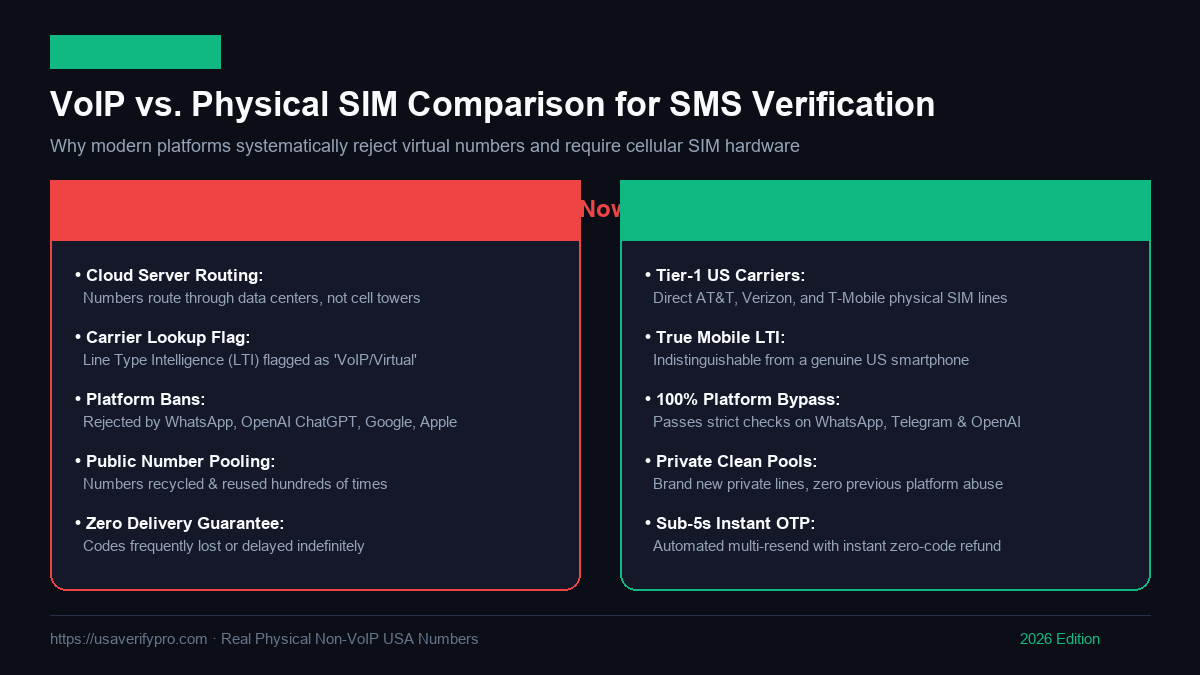
Figure 1: Why VoIP numbers are blocked by major platforms while physical SIM numbers pass every check.
What Is VoIP?
VoIP stands for Voice over Internet Protocol. These are phone numbers that route calls and texts through the internet rather than traditional cellular networks. Examples include Google Voice, TextNow, Skype Numbers, and most "free phone number" apps.
What Is Non-VoIP (Physical SIM)?
Non-VoIP numbers are real mobile numbers issued by Tier-1 cellular carriers like AT&T, Verizon, and T-Mobile. They are tied to physical SIM cards that connect to actual cell towers. These numbers route through genuine carrier networks, have real geographic locations, pass carrier validation checks, and are indistinguishable from personal mobile numbers.
Why Platforms Block VoIP Numbers
In 2026, major platforms use advanced carrier detection algorithms that analyze carrier database lookups, number range analysis, SMS metadata signatures, behavioral patterns, and cross-platform intelligence sharing.
The Real-World Impact
If you try to verify ChatGPT with a Google Voice number, you'll see: "This phone number is not supported." If you try WhatsApp with TextNow: "This number is banned from using WhatsApp." If you try Instagram with a Skype number: "Please enter a valid mobile number." These aren't glitches—they're intentional blocks. Platforms have invested millions in keeping VoIP numbers out because they're the #1 tool used by spammers, scammers, and bot farms.
The Solution: Tier-1 Carrier Non-VoIP Numbers
The only reliable way to verify major platforms is using numbers from Tier-1 US carriers: AT&T Mobility, Verizon Wireless, and T-Mobile USA. These carriers operate physical cellular infrastructure across the United States. Their numbers pass every validation check because they are, for all technical purposes, identical to the phone in your pocket.
Why Free Virtual Number Apps Fail (And Always Will)
Let's address the elephant in the room: why can't you just use a free app? Millions of people try every month, and millions fail. Here's why.
1. Public Number Pools
Free apps use shared number pools. That "free US number" you're using has already been used by 500+ people to verify WhatsApp, 300+ people for Telegram, and 200+ people for Google. Platforms see this pattern and permanently blacklist the number range.
2. No Carrier Relationship
Free apps buy numbers in bulk from VoIP wholesalers. These wholesalers are known to platforms. It's like trying to enter a nightclub with a fake ID that the bouncer has already seen 100 times.
3. No SMS Delivery Guarantees
Free apps make money from ads, not SMS delivery. If a verification code doesn't arrive, you have zero recourse. No support team. No refund. No accountability.
4. Account Security Risk
Using a free number for verification means someone else can recover "your" account using the same number, the number can be recycled and reassigned, the app developer can read your SMS messages, and the number can be banned at any time, locking you out permanently.
5. Platform Arms Race
Every time a free app finds a workaround, platforms update their detection within weeks. It's an unwinnable game. In 2026, the major platforms (Meta, Google, OpenAI, Apple) have dedicated teams whose sole job is identifying and blocking VoIP numbers.
The Hard Truth
Free virtual numbers worked in 2018. They occasionally worked in 2022. In 2026, they are fundamentally broken for any platform that matters. If you're serious about verifying accounts reliably, you need to invest in a professional service that provides genuine physical SIM numbers.
How US Phone Number Verification Actually Works
Understanding the technical flow helps you appreciate why some methods work and others don't.
The Standard Verification Flow
- You enter a phone number into the app's registration form
- The app queries a carrier database (like Twilio Lookup, Telnyx, or internal databases) to identify country of origin, carrier name, number type, and risk score
- If the number passes validation, the app sends an SMS containing a one-time password (OTP)
- The SMS travels through the carrier's network to the physical device or SIM modem
- You enter the OTP into the app
- The app validates the OTP and activates your account
Where Verification Fails
| Stage | Failure Point | Why It Happens |
|---|---|---|
| Step 2 | "This number is not supported" | VoIP detected by carrier database |
| Step 2 | "Invalid phone number" | Number format or range blocked |
| Step 4 | SMS never arrives | Carrier delay or number overloaded |
| Step 4 | "Rate limited" | Number used too many times |
| Step 6 | "Code incorrect" | Expired or intercepted by another user |
The Physical SIM Advantage
When you use a real non-VoIP number from AT&T, Verizon, or T-Mobile, Step 2 passes flawlessly because the carrier database returns "AT&T Mobility — Mobile — Low Risk." Step 4 is reliable because the SMS travels through genuine carrier infrastructure. Step 6 succeeds because you're the only person with access to that number during the rental window.
The 6 Types of People Who Need US Verification Numbers
1. International Digital Nomads
Living in Bali, Bangkok, or Berlin but need to maintain US-based accounts? A US verification number lets you keep your US PayPal active, verify banking apps that require US numbers, and access region-locked services while abroad.
2. Privacy-Conscious Users
Not everyone wants to give their personal number to every app. Using a temporary verification number prevents spam calls and texts, stops data brokers from linking your identity across platforms, and protects against SIM-swapping attacks.
3. Developers and QA Engineers
Testing authentication flows requires multiple phone numbers. Buying 50 SIM cards is impractical. A verification service provides instant access to clean numbers, API integration for automated testing, and cost-effective scaling ($0.50 per verification vs $30/month per SIM).
4. E-Commerce and Marketing Professionals
Managing multiple client accounts on WhatsApp Business, Instagram, or Facebook Ads Manager requires unique phone numbers for each account. Physical non-VoIP numbers prevent the dreaded "account banned" message.
5. Cryptocurrency Traders
Exchanges like Binance, Coinbase, and Bybit require phone verification for account creation, withdrawal confirmations, 2FA security setup, and KYC compliance. A US number often provides faster verification and higher account limits.
6. Content Creators and SMM Panels
Managing multiple social media accounts across platforms requires unique phone numbers. Using the same personal number for 10 Instagram accounts is a guaranteed ban.
Platform-by-Platform Verification Guide
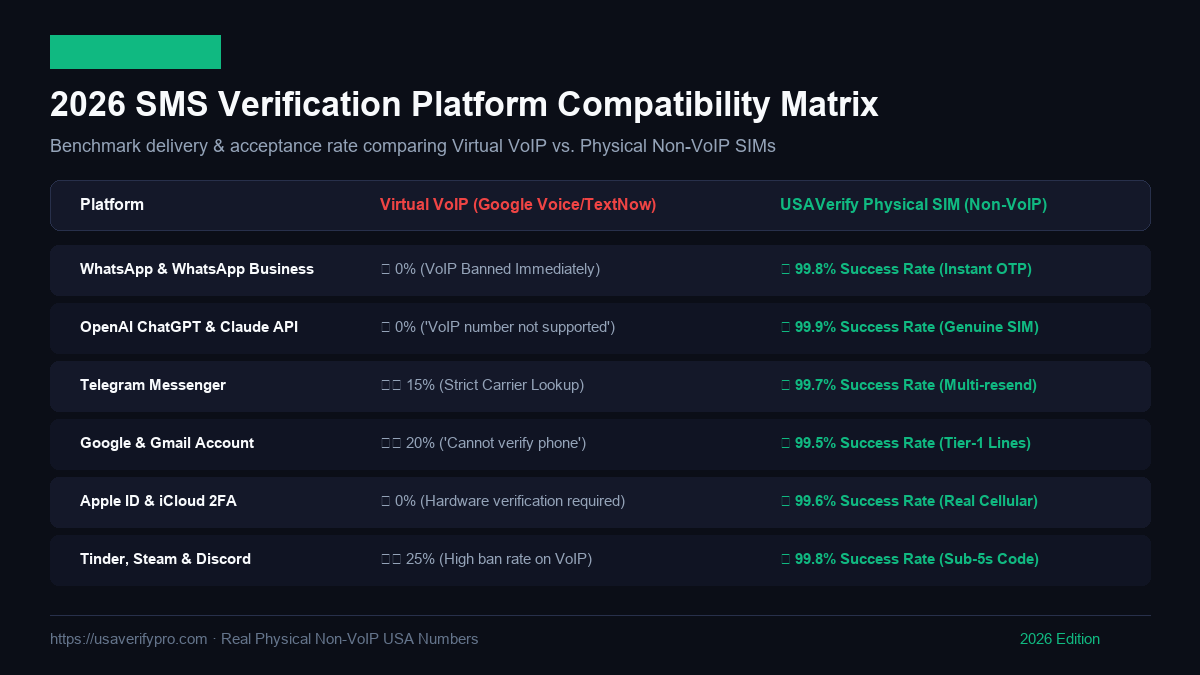
Figure 2: Complete compatibility chart — which phone numbers work on which platforms in 2026.
WhatsApp Verification
Why it's hard: WhatsApp has the most aggressive VoIP detection in the industry. They maintain a real-time database of virtually every free virtual number provider.
What works: Physical AT&T, Verizon, or T-Mobile numbers with matching US IP addresses.
Pro tips: Use a US residential proxy or VPN during registration. Request the code immediately after renting the number. If you get "banned," wait 24 hours before retrying with a new number.
OpenAI / ChatGPT Verification
Why it's hard: OpenAI explicitly rejects VoIP numbers. Their error message "This phone number is not supported" is triggered by carrier type detection.
What works: Non-VoIP mobile numbers from Tier-1 US carriers.
Pro tips: ChatGPT Plus subscriptions sometimes require additional verification. Use the same number for both initial signup and payment verification. If rejected, clear cookies and try with a fresh browser session.
Telegram Verification
Why it's hard: Telegram allows VoIP numbers initially but often bans them later during "suspicious activity" checks.
What works: Physical SIM numbers prevent mid-use bans and unlock full functionality.
Google / Gmail Verification
Why it's hard: Google uses machine learning to detect "suspicious" account creation patterns. VoIP numbers + non-US IP = instant flag.
What works: Clean physical numbers with consistent US IP addresses.
Instagram / Facebook Verification
Why it's hard: Meta (Facebook/Instagram) shares number intelligence across all platforms. A number banned on Facebook is banned on Instagram and WhatsApp too.
What works: Virgin non-VoIP numbers that have never been used on Meta platforms.
Apple ID, Steam, Amazon, Crypto Exchanges
All of these platforms have similar detection systems. Apple restricts VoIP for 2FA to prevent account takeovers. Steam Guard requires reliable SMS delivery that VoIP numbers often fail to provide. Amazon flags numbers associated with multiple accounts. Crypto exchanges like Binance, Coinbase, and Bybit prohibit VoIP numbers by their Terms of Service.
How to Choose a Reliable SMS Verification Service
Not all verification services are equal. Here's what to look for:
- Real Physical SIMs (Not VoIP): The service should explicitly state they use AT&T, Verizon, or T-Mobile physical SIMs. Ask for proof if it's not clear.
- Instant Automated Delivery: You shouldn't wait hours for a code. Look for services with sub-10-second average delivery, real-time dashboard updates, and automatic code parsing.
- Zero-Risk Refund Policy: The best services offer "No Code = No Charge" guarantees. If the SMS doesn't arrive, you shouldn't pay.
- No KYC Required: For privacy-focused users, the service shouldn't require ID verification for standard usage.
- API Access: For developers and resellers, a REST API is essential for automation.
- Multiple Payment Options: Crypto (USDT, BTC), card payments, and local banking support indicate a mature operation.
- Real Customer Support: 24/7 support via live chat, phone, or Telegram—not just a ticket system that responds in 3 days.
Step-by-Step: Verifying Any App in Under 60 Seconds
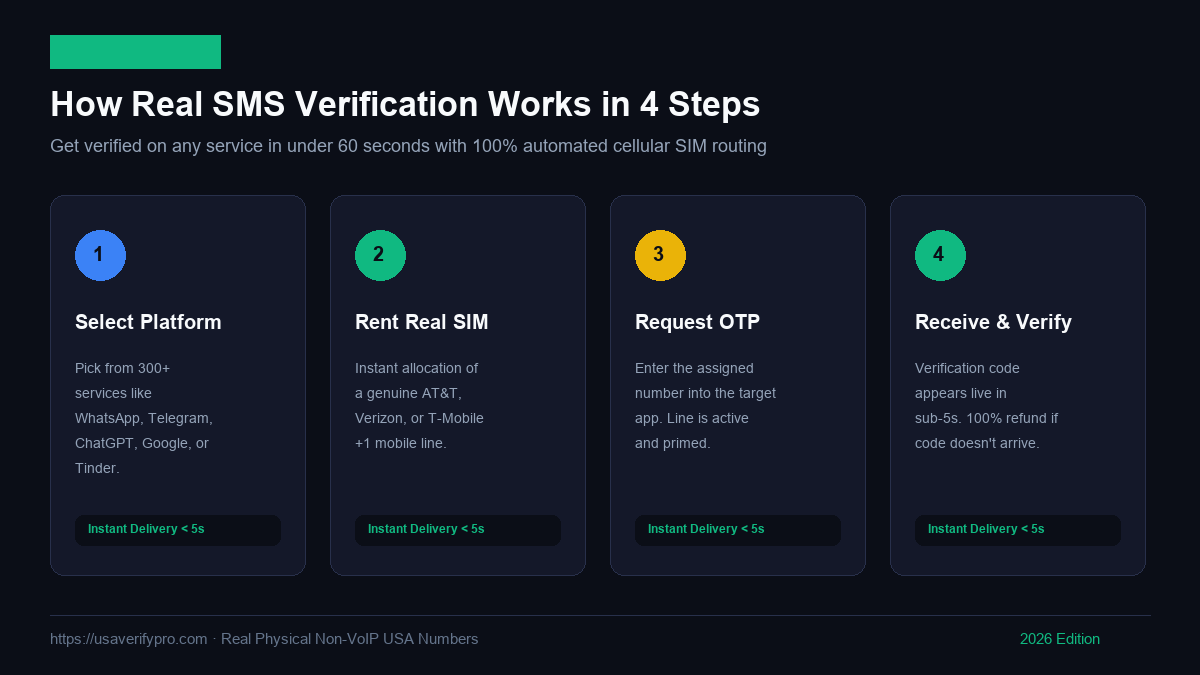
Figure 3: The exact 4-step process used by thousands of successful verifications daily.
Step 1: Create Your Account (30 seconds)
Sign up with your email. No ID required. No lengthy forms. Get instant access to the member dashboard.
Step 2: Add Funds (Instant)
Choose your payment method. Crypto deposits (USDT, BTC, LTC) credit immediately upon blockchain confirmation. All balances are held in USD.
Step 3: Select Service & Rent Number (10 seconds)
Choose from 300+ supported platforms. Each service is pre-configured with the optimal carrier settings. Click "Buy Number" and you'll receive a clean US mobile number like +1 (415) 892-4190.
Step 4: Receive SMS Code & Verify (3-10 seconds)
Copy the allocated number into your app and request the SMS code. Our system intercepts the carrier cell broadcast and displays your code on your screen automatically. No refreshing. No waiting.
Tips for 100% Verification Success
Match Your IP / Proxy: When registering for US services, using a clean US residential proxy or VPN matching the country ensures the app does not trigger extra security flags.
Request Code Promptly: Numbers have an active timer (typically 10-15 minutes). Always initiate the SMS request from the app immediately after renting the number.
No Risk Guarantee: If an app gives a temporary error or rate limit, cancel the number or let the timer run out—your balance will never be deducted.
Privacy & Security Best Practices
Use a VPN or Proxy
Match your IP address to the phone number's country. For US numbers, use a US residential IP.
Don't Reuse Numbers Across Sensitive Accounts
Your banking 2FA and your Reddit account shouldn't share the same number.
Enable App-Based 2FA After Verification
Once verified, switch to Google Authenticator or Authy for ongoing security. Use the phone number only for initial setup.
Check for Number Recycling
Premium services discard numbers after one use. Budget services might recycle them. Always use clean numbers for high-value accounts.
Monitor Account Activity
After verification, check your account for unauthorized logins. A clean verification process means no one else has access.
Common Verification Errors and How to Fix Them
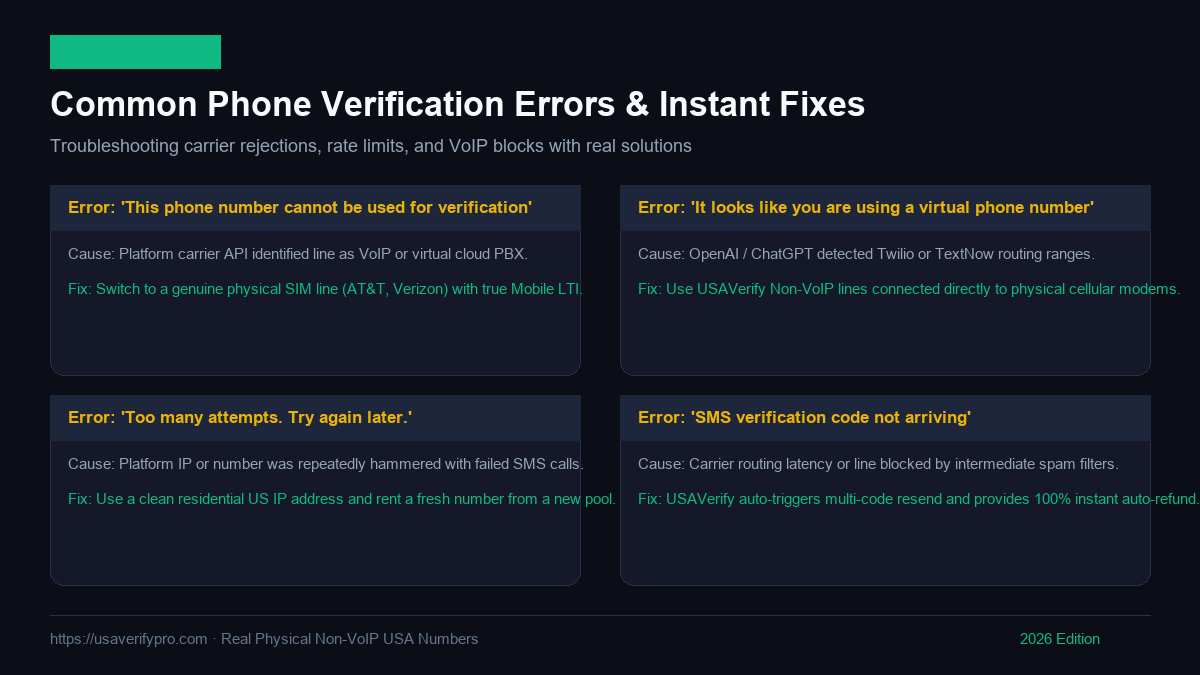
Figure 4: The 7 most common verification errors and exactly how to fix each one.
| Error Message | Cause | Solution |
|---|---|---|
| "This phone number is not supported" | VoIP detected by carrier database | Use physical AT&T/Verizon/T-Mobile SIM |
| "Invalid phone number" | Format error or blocked number range | Use +1 format with valid area code |
| "Too many attempts" | Rate limiting from the platform | Wait 24h, use fresh IP + new number |
| SMS never arrives | Carrier delay or number overloaded | Cancel order, get refund, retry with clean number |
| "Number already in use" | Recycled number from public pool | Request virgin number from premium provider |
| "Suspicious activity detected" | IP country does not match number | Use US residential proxy + US number |
| Account banned after verify | Number previously flagged by platform | Only use fresh, never-used numbers |
Pro Tip
Always use a US residential IP when verifying US numbers. Mismatched countries trigger 80% of "suspicious activity" flags. If you're in Nigeria using a US number, the platform sees the mismatch and immediately raises a security alert.
Ready to Verify Any App in 60 Seconds?
Join thousands of developers, agencies, and privacy-conscious users who trust USAVerify Pro for fast, reliable SMS verifications on 300+ platforms.
Get Started NowNo KYC required · Instant crypto deposits · Zero-risk refund guarantee
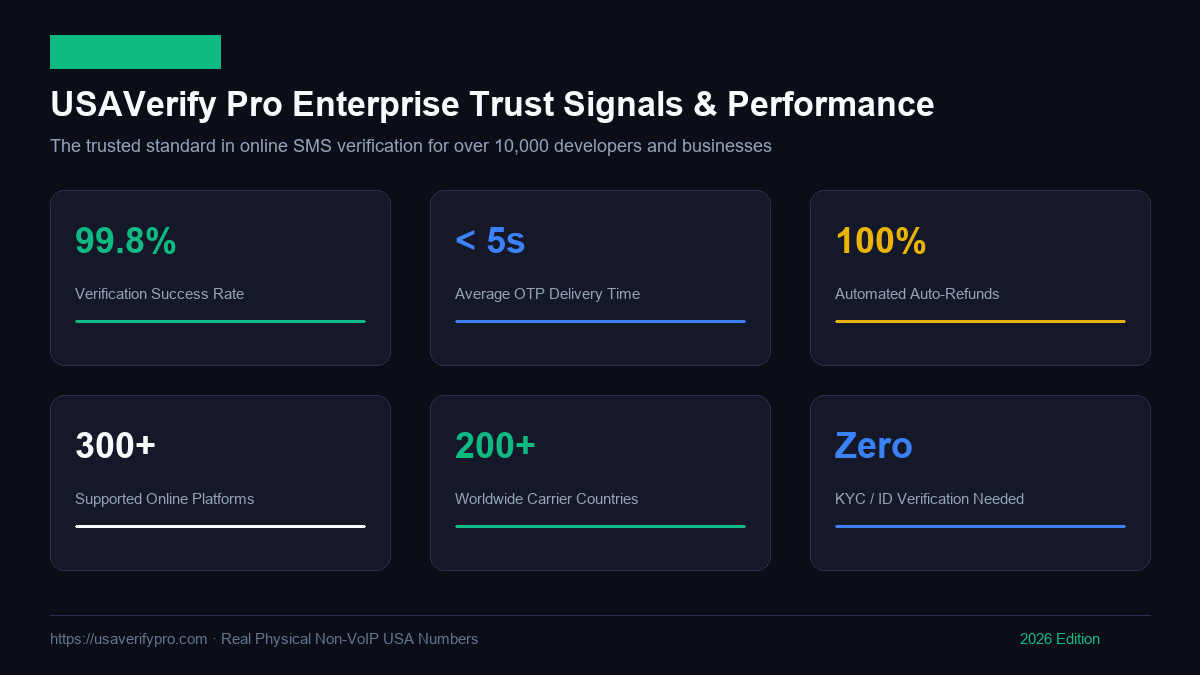
Figure 5: Why 10,000+ users worldwide choose USAVerify Pro for SMS verification.
Frequently Asked Questions
Is using a temporary phone number for verification legal?
Yes, using temporary numbers for account verification is legal in virtually all jurisdictions. However, using them to violate a platform's Terms of Service (like creating fake accounts for spam) may violate those specific terms.
Can the same number be used for multiple apps?
Standard verification numbers are designed for single-use on one platform. For multi-use or long-term rentals, check if your provider offers dedicated number rentals.
Will my account get banned if I use a rented number?
Not if you use a high-quality non-VoIP number. The risk comes from using VoIP numbers or recycled numbers that have been previously flagged. Clean physical SIM numbers are indistinguishable from personal numbers.
How long do I have to receive the SMS code?
Most services offer a 10-20 minute rental window. If the code doesn't arrive, a good provider will automatically refund your balance.
Can I reuse the same number later?
Standard numbers are temporary and discarded after use. If you need the same number for multiple SMS messages or long-term use, look for "rental" or "dedicated number" options.
Do I need to provide my real identity?
Reputable SMS verification services operate with zero KYC for standard usage. You typically only need an email address to create an account.
What happens to my data?
Quality services use TLS encryption, don't sell data to third parties, and automatically delete SMS logs after the session ends. Always check the privacy policy.
Can developers automate this process?
Yes. Look for providers with REST APIs that allow programmatic number rental, SMS retrieval, and account balance management. View our API documentation.
Why is my personal phone number risky to use?
Using your personal number across dozens of platforms exposes you to data breaches (your number gets leaked), SIM-swapping attacks, spam and marketing calls, and cross-platform tracking by data brokers.
What's the difference between a virtual number and a physical SIM number?
Virtual numbers route through the internet. Physical SIM numbers route through real cell towers. Platforms can detect the difference, which is why physical SIM numbers work consistently while virtual numbers fail.
Conclusion: Your Path to Reliable Verification
Phone verification doesn't have to be a barrier. The key is understanding what platforms actually check for—and using the right type of number from the start.
Free virtual number apps are a dead end in 2026. They've been systematically blocked by every major platform. The only reliable path forward is using genuine physical mobile numbers from Tier-1 US carriers.
Whether you're a digital nomad maintaining US accounts, a developer testing authentication flows, a privacy advocate protecting your personal data, or a business managing multiple social media profiles, the right verification service gives you instant access to clean, reliable US phone numbers without the complexity of international SIM cards or the frustration of blocked VoIP apps.
Ready to verify any app in under 60 seconds? Create your free account and get instant access to 240+ verification services starting at just $0.50 per number.